



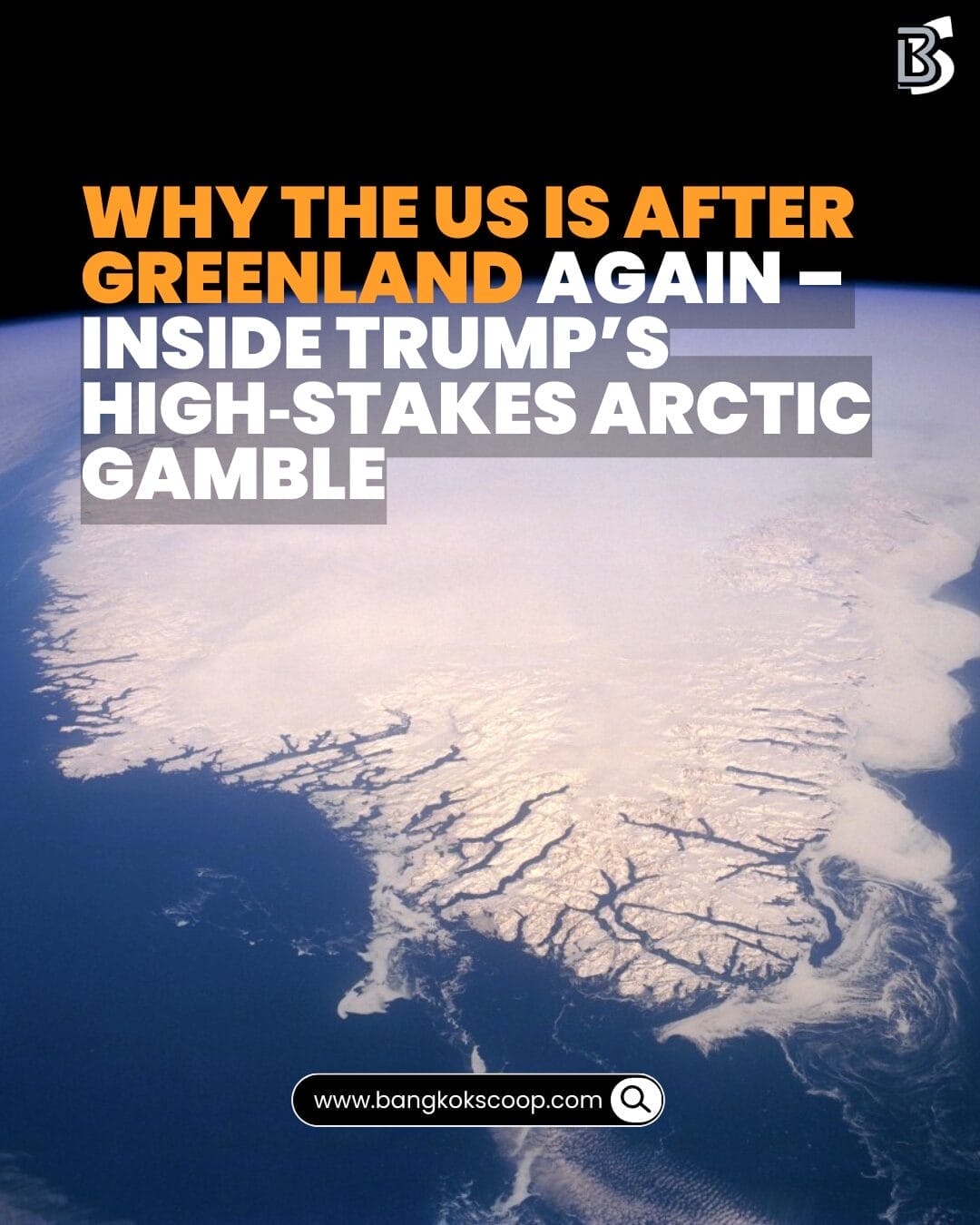
Why the US Is After Greenland Again – Inside Trump’s High‑Stakes Arctic Gamble
President Donald Trump is again pushing one of his most controversial foreign‑policy ideas: bringing Greenland under the American flag. In early January, the White House confirmed that it is “discussing a range of options” to acquire the vast Arctic island from Denmark and called securing Greenland a “national security priority” – language rarely used about foreign territory in peacetime. Officials and outside advisers have floated possibilities from a traditional purchase agreement to a looser Compact of Free Association, and, more explosively, say the US president has not ruled out using the military if diplomacy fails.
Thank you for reading this post, don't forget to subscribe!
For many in Europe, the notion of the United States seizing a NATO partner’s territory sounds fantastical – or alarming. For Trump’s circle, Greenland is more than a frozen curiosity: it is a forward missile‑warning base, a potential trove of critical minerals and a strategic anchor in a polar region where Russia and China are expanding their footprint. As ice melts and new Arctic shipping lanes open that could rewire trade between Europe and Asia, the contest over this sparsely populated island is becoming a test case for a colder, more transactional geopolitics that stretches far beyond the North Atlantic.
How Trump revived the Greenland dream
Trump’s fascination with Greenland dates back to his first term, when he tried to explore whether the territory could be bought from Denmark and was bluntly told it was not for sale. The idea returned with new intensity in 2026, after US forces helped topple Venezuela’s Nicolás Maduro and the president publicly linked that operation to a wider willingness to redraw the map in America’s favour. Within days, Trump told reporters that the US “needed” Greenland because it was “covered with Russian and Chinese ships”, and aides began briefing journalists that “all options” were on the table to secure it.
According to US and European officials, at least three broad paths are now under active discussion in Washington. The first is a classic purchase agreement with Denmark – politically unthinkable in Copenhagen, but still popular with some Trump advisers who see historical precedent in America’s 1917 purchase of the Danish West Indies, now the US Virgin Islands. The second is a Compact of Free Association, modelled on deals with Pacific island states that handle their own internal affairs while the US controls defence and has broad strategic access. The third, more hypothetical but no longer dismissed outright by some in Trump’s orbit, is the use of military pressure or presence to force a change in Greenland’s status if talks stalemate.
Reports have also emerged that US officials have quietly studied economic incentives or payments aimed directly at Greenland’s 56,000 residents to encourage greater political distance from Denmark. That idea has enraged politicians in Copenhagen and in Nuuk, Greenland’s capital, who see it as a direct attempt to fracture the kingdom of Denmark from within. For Trump’s backers, however, the controversy is a sign that the president is willing to break taboos over territory to secure long‑term US advantage in the Arctic.

The missile‑warning outpost at the “top of the world”
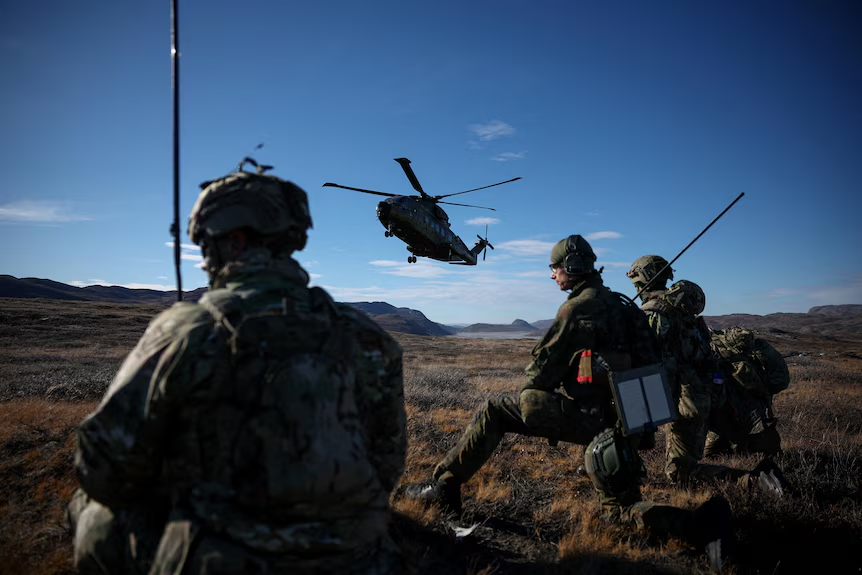
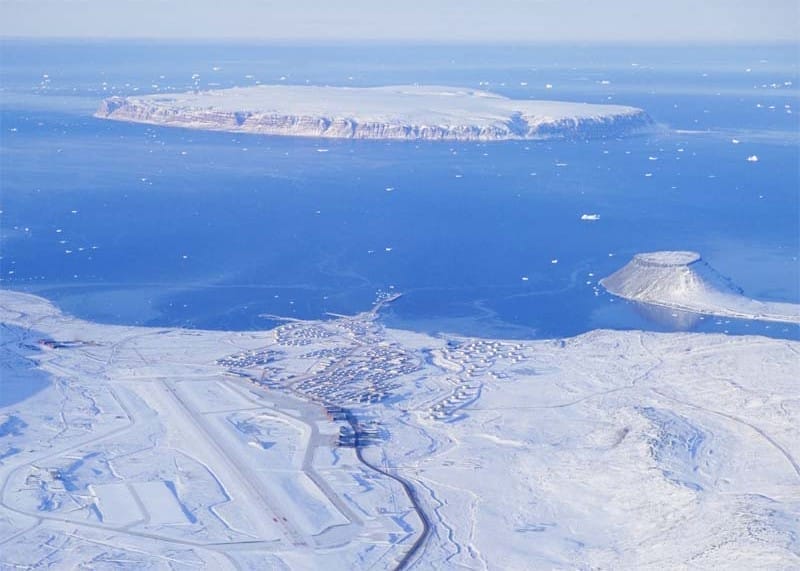
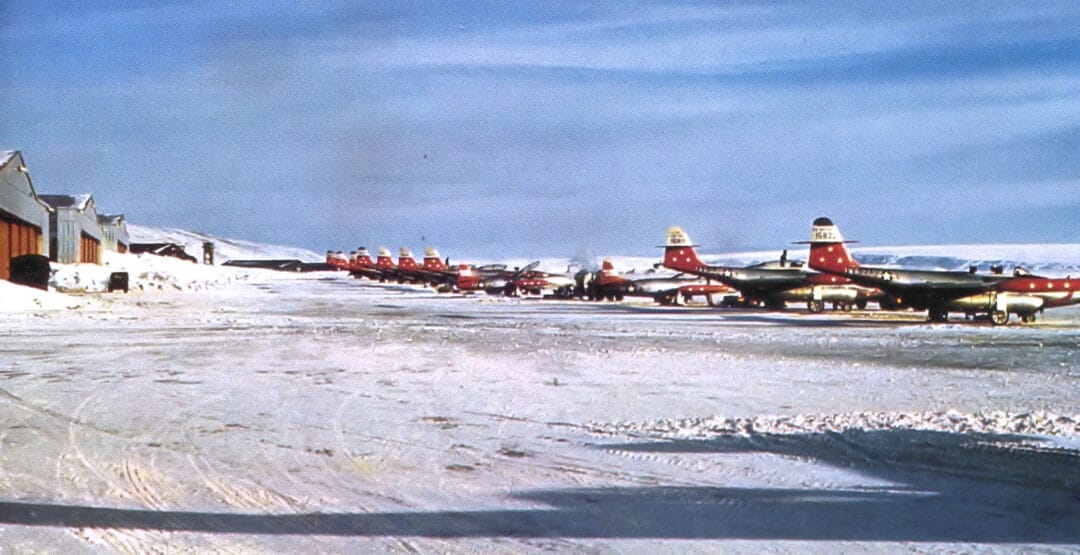
Behind the headline‑grabbing talk of buying Greenland lies a more concrete reality: the United States is already deeply embedded on the island through Pituffik Space Base, formerly known as Thule Air Base. Perched on Greenland’s remote northwest coast, Pituffik is the US military’s northernmost installation and a key node in its global missile‑warning and space‑surveillance network. The base hosts the 12th Space Warning Squadron, which operates a powerful phased‑array radar originally built for the Cold War Ballistic Missile Early Warning System and now upgraded to track intercontinental and sea‑launched missiles that could cross the Arctic toward North America.
US Space Force documents describe Pituffik as providing “missile warning, missile defense and space surveillance” from a “Top of the World” vantage point that enables what the Pentagon calls space superiority. In practice, that means the base’s radars and satellite links feed real‑time data to NORAD and US Strategic Command, giving commanders precious minutes to assess a potential nuclear strike or hostile satellite activity. With only about 150 US personnel on site, supported by Danish and Greenlandic workers, the outpost punches far above its weight in Washington’s strategic thinking.
As climate change opens more of the Arctic Ocean, Pituffik’s role is expanding. US and NATO militaries increasingly use the surrounding air and sea space to monitor Russian submarines and long‑range aircraft as they transit between the Arctic and North Atlantic, while also keeping an eye on Chinese research vessels and ice‑capable ships whose dual‑use potential worries Western planners. For Trump’s advisers, full sovereignty or a looser association with Greenland would give the US not just a secure base but greater freedom to expand missile defenses, sensor networks and perhaps even new hypersonic interceptors across the island.
Rare earths, China and the minerals gamble
If missiles and radars explain the military logic, minerals – especially rare earths – drive much of the economic argument Trump’s team makes for going after Greenland. The island hosts significant deposits of rare earth elements, graphite and other critical minerals needed for everything from smartphones and wind turbines to electric vehicle motors and advanced weapons systems. In theory, tapping these resources could help the US and its allies reduce dependence on China, which today dominates both mining and, even more importantly, processing of rare earths.
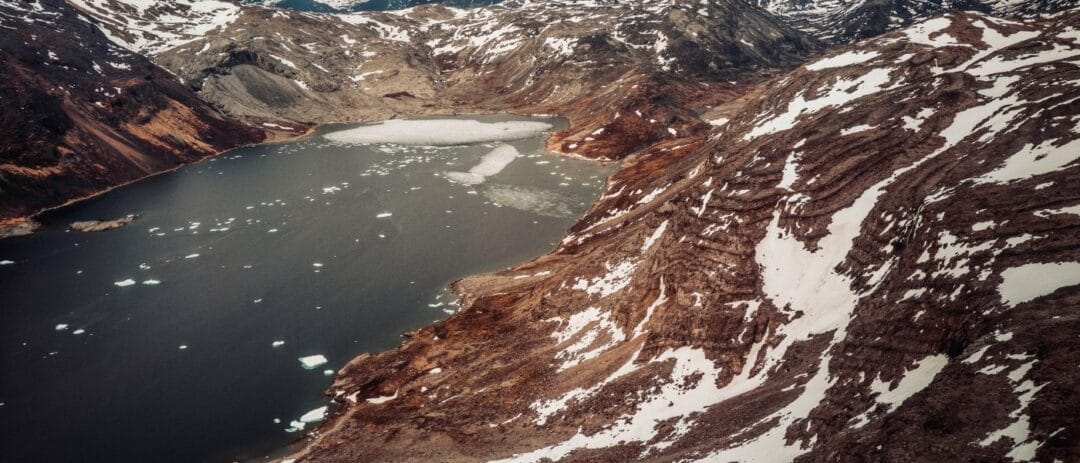
Projects such as the Tanbreez rare earth deposit in southern Greenland have become focal points in this tug‑of‑war. Analysts at the Center for Strategic and International Studies note that US officials lobbied hard to keep Tanbreez from being sold to Chinese buyers, and the deposit is now controlled by a New York‑listed company, Critical Metals Corp, after a deal reportedly accepted at a lower price than Chinese offers. Other ventures, like the Kvanefjeld rare earth and uranium project, have seen Chinese investors pushed out amid geopolitical concerns, even as local environmental groups in Greenland campaign against large‑scale open‑pit mining.
Yet the minerals pitch is far from straightforward. Industry experts interviewed by CNBC and other outlets argue that Washington’s belief it can quickly “break” China’s rare‑earth dominance by turning to Greenland is “absurd”, pointing to low ore grades, harsh weather, minimal infrastructure and the reality that any ore extracted would still likely need to be processed in Chinese facilities for years. The US Geological Survey itself estimates the United States holds rare‑earth reserves greater than Greenland’s, raising the awkward question of why politically explosive Arctic projects should be prioritised over developing resources at home.
From Greenland’s perspective, a minerals boom could be both an opportunity and a risk. The island’s economy remains small – its GDP was only around 3.3 billion dollars in 2023 – and one major mining or processing project could account for a significant slice of output, potentially giving foreign investors outsized leverage. Environmental damage or social disruption from large projects in remote communities could also feed local resentment, especially if profits appear to flow mainly to foreign capitals. That tension between development and autonomy sits at the heart of Greenland’s own debate about how far to embrace US, European or Chinese money.
Allies push back, small nation in the middle
If Trump views Greenland as a neglected asset waiting to be claimed, Denmark and many of America’s European allies see something very different: a loyal Arctic partner whose future should not be dictated by great‑power bargaining. Danish Prime Minister Mette Frederiksen has publicly urged Trump to “cease the threats” and called the notion of the US taking over Greenland a “fantasy”, while lawmakers in Copenhagen warn that any talk of military pressure is incompatible with the spirit of NATO. Other European leaders have signalled that attempts to coerce Greenland could trigger diplomatic or even economic retaliation, deepening transatlantic rifts at a time of war in Ukraine.
Greenland’s own leaders are equally clear that sovereignty decisions must run through Nuuk, not Washington. The island already enjoys broad self‑rule in domestic affairs, with Copenhagen retaining responsibility for defence and foreign policy, and long‑term plans in Nuuk envision a gradual path toward eventual full independence supported by fishing revenue, tourism and carefully managed resource projects. For many Greenlanders, the idea of swapping Danish oversight for US ownership or a highly asymmetric association holds little appeal, especially if it brings intensified military activity or pressure to approve controversial mines.
At the same time, Greenland cannot simply ignore the reality of intensifying interest from global powers. China has branded itself a “near‑Arctic state” and tried to invest in airports and mining projects on the island, moves that have already spooked Denmark and the US. Russia’s military build‑up along its Arctic coast and on islands like Franz Josef Land and Novaya Zemlya has pushed NATO to look for more northern basing and surveillance options, putting Greenland back at the centre of strategy discussions in Brussels and Washington. For a territory of just tens of thousands of people, navigating these pressures will only get harder as the Arctic warms.
Why this Arctic fight matters to Asia
At first glance, a tug‑of‑war over an icy island near the North Pole may feel distant for readers in Bangkok or Singapore, but what happens in Greenland could reshape the map of global trade and technology – including in Asia. As sea ice retreats, new Arctic shipping routes such as the Northern Sea Route along Russia’s coast and potential trans‑polar passages could shorten travel times between northern Europe and northeast Asia by thousands of kilometres compared with traditional routes via the Indian Ocean and Malacca Strait. While these routes will not replace busy lanes through Southeast Asia soon, they could gradually shift some high‑value, time‑sensitive cargo northward, changing port competition and logistics patterns that countries like Thailand closely track.
On the technology side, Greenland’s role in rare earths ties directly into Asia’s manufacturing base. China currently dominates not only mining but also refining of rare earth elements, and even if Greenland were developed under US‑friendly terms, its ores would likely still be shipped to Asia for processing until alternative plants are built elsewhere. That means any scramble for Greenland’s minerals will feed into broader efforts by Japan, South Korea, ASEAN states and India to diversify critical materials supply chains for electric vehicles, batteries and defence industries. For investors, shippers and policymakers across the Indo‑Pacific, Greenland’s future is becoming another barometer of how far great‑power rivalry will reshape the world’s economic geography.
For BangkokScoop readers, the message is clear: the battle for Greenland is not just a quirky story about Trump and an icy island – it is a window into the next phase of global competition over security, minerals and climate‑driven trade routes that will, sooner or later, touch Asia’s shores as well.
Sources
https://www.bbc.com/news/articles/cwyg1jg8xkmo
https://www.cnn.com/2026/01/06/politics/us-options-greenland-military
https://www.npr.org/2026/01/07/nx-s1-5670244/trump-greenland
https://www.abc.net.au/news/2026-01-08/three-options-us-considering-to-take-greenland/106207610
https://www.reuters.com/world/trump-advisers-discussing-options-acquiring-greenland-us-military-is-always-an-2026-01-06/
https://www.highnorthnews.com/en/white-house-draws-plans-acquire-greenland-trump-revives-territorial-ambitions
https://www.cnbc.com/2026/01/08/greenland-trump-takeover-bid-denmark-what-happens-next.html
https://www.csis.org/analysis/greenland-rare-earths-and-arctic-security
https://sundayguardianlive.com/world/pituffik-space-base-how-the-only-us-base-in-greenland-became-central-to-space-defense-arctic-strategy-163824/amp/
https://www.aljazeera.com/news/2026/1/7/european-allies-reiterate-support-for-greenland-amid-us-threats
https://www.thearcticinstitute.org/dig-baby-dig-chinas-mineral-dominance-ripple-effects-arctic/
https://www.1news.co.nz/2026/01/08/why-greenland-is-so-strategically-important-to-arctic-security/
https://en.wikipedia.org/wiki/Proposed_United_States_acquisition_of_Greenland
https://www.reuters.com/world/europe/trump-administration-mulls-payments-sway-greenlanders-join-us-2026-01-08/
https://rareearthexchanges.com/news/greenland-the-flag-and-the-fracture-line/
https://en.wikipedia.org/wiki/Pituffik_Space_Base
https://www.space.com/space-exploration/missions/what-is-the-us-space-force-doing-in-greenland
https://www.petersonschriever.spaceforce.mil/pituffik-sb-greenland/
https://www.npr.org/2025/03/26/nx-s1-5341505/greenland-pituffik-space-military-base
https://www.cnbc.com/2026/01/07/greenland-rare-earths-us-china-processing-reality-mining-arctic-shipping-lanes-route-critical-minerals.html
https://fortune.com/2026/01/07/trump-greenland-billions-decades-mineral-experts/
https://www.europarl.europa.eu/RegData/etudes/BRIE/2025/769527/EPRS_BRI2025769527_EN.pdf
https://fortune.com/2026/01/08/trump-military-presence-1951-agreement-greenland-denmark/
https://www.abc.net.au/news/2026-01-09/donald-trump-greenland-denmark-nato-comments-worrying-island/106210090
https://www.britannica.com/topic/Why-Is-the-US-Interested-in-Greenland